The Lasting Value of Heritage in a Modern Real Estate Market
As prime homes around the world grow more polished, more technologically sophisticated and more alike, the rarest thing a buyer can acquire may no longer be access. It may be authenticity.
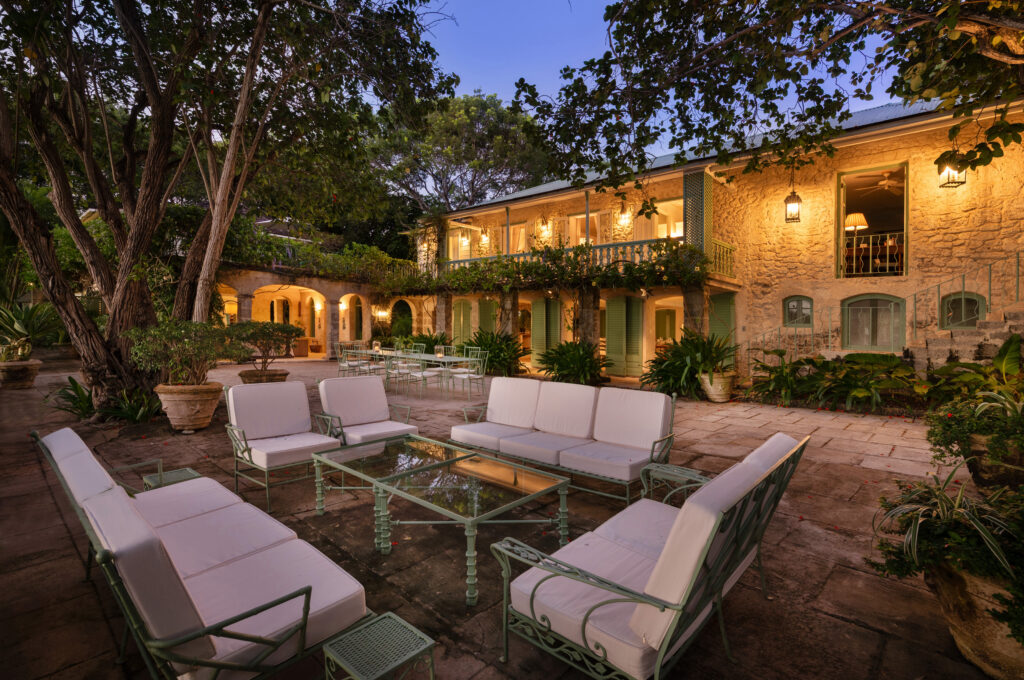
For much of the modern luxury market, many of the elements that once signaled rarity can now be created. Privacy can be designed. Views can be framed. Materials can be imported from anywhere in the world. Houses can be delivered turnkey, furnished and finished to a standard that would have been extraordinary a generation ago.
What is impossible to recreate today is a home that has stood the test of time for three centuries. Fustic Estate is one of Barbados’ most historically significant estates, a rare place that is part of the fabric and history of this corner of the island.
Rarity, redefined
In a world where many elements of luxury can be replicated, rarity is increasingly about character and provenance. The features that once set a prime home apart, the private beach, the infinity pool or the separate staff wing have become specifications.
On the Platinum Coast of Barbados, as in Palm Beach, the Hamptons or the Côte d’Azur, the best new villas can be genuinely remarkable. But remarkable is not the same as rare.
Properties with a genuine sense of history occupy a different category. Their value lies not simply in what they offer today, but in what cannot be recreated: the evidence of time, the continuity of place and the character that develops when a home remains connected to its surroundings and its history.
A visual language left intact
There is something quietly compelling about inhabiting a place whose visual language belongs to its location. In Barbados, that language was shaped by the climate long before it was shaped by architects: coral stone, valued for its natural cooling qualities; deep verandahs that provide shade; wide openings and generous windows that capture the island’s natural breezes; and shutters that respond to the trade winds.
Fustic Estate, in the parish of St Lucy at the northern tip of the island, is a clear example. The house dates to 1712 and was later reimagined by Oliver Messel, the celebrated British stage designer who settled in Barbados in the 1960s and went on to shape some of the Caribbean’s most admired private homes.
Messel’s influence remains an important part of Fustic’s character. His signature details, including the distinctive Messel green accents, shutters, arched openings and other carefully considered design elements, have been retained as the estate has evolved.
Over three centuries, the property has expanded and adapted, with new bedroom wings and other spaces added thoughtfully to provide greater flexibility for family and guests while respecting the character and proportions of what was already there. The result is a home that feels neither frozen in time nor disconnected from its past. It has continued to evolve while retaining the elements that make it unmistakably Fustic.
Today, the estate extends across approximately 11 acres of mature grounds overlooking the Caribbean Sea, with winding paths, established planting and a lagoon-style pool set into a natural coral ravine. Indoor and outdoor living flow naturally together, with the gardens and sea becoming part of everyday life.
The stories a house carries
Perhaps one of the greatest pleasures of a home with history is imagining the generations who have enjoyed it before you, the marriages, births, celebrations, family gatherings and quiet moments that have taken place within its walls.
Fustic has been shaped over generations, not only by its architecture and landscape, but by the people who have lived there and cared for it. It is easy to imagine a home like this continuing to be a place where families come together, where children explore the gardens, where long lunches turn into afternoons and evenings are spent watching the light change over the sea. History repeating itself.
The separate beachfront parcel, with its chattel-style cottage and beach house, extends that sense of space and privacy to the water, creating another setting for relaxed days, entertaining and time together.
There is a particular sense of freedom that comes from a place like Fustic. This is not a house shaped by a formula, but one shaped by three centuries of history, with layers of architecture, landscape and stories that invite the imagination. Its scale, privacy and connection to nature allow people to slow down, spend time together and experience the house in their own way.
It is a home that leaves room for life to happen and for new memories to become part of its long history.
Luxury as continuity, not consumption
Most luxury is consumed. It is bought, enjoyed and, in time, replaced by the next model or the next season.
Legacy assets work differently. They are held, and they are handed on.
This is the logic of the country house and the listed townhouse, where an owner is as much a custodian as a proprietor. A home like Fustic is not simply furnished and completed. It is continued, with each generation adding to its story rather than starting a new one.
For a new owner, that continuity also brings the opportunity to make the estate their own, through thoughtful additions or changes that respond to the way their family lives, while respecting what has come before, and becoming part of its history.
There is something almost collectible about that kind of history, not because the house is an object to be acquired and traded, but because its story, setting and architectural pedigree make it increasingly difficult to replicate.
The New Scarcity
Prime markets will continue to produce exceptional new homes, and they should. But the supply of houses with three centuries of history, an authentic architectural pedigree and land enough to preserve their sense of place is fixed.
In the Caribbean, it is very small indeed.
Estates of this age and character come to market rarely. Their appeal lies not only in their beauty, but in the fact that they have survived, evolved and remained relevant across centuries.
Perhaps the rarest thing in luxury real estate is no longer access.
It is authenticity.
Fustic Estate
Fustic Estate, St Lucy, Barbados, is an approximately 11-acre private estate dating to 1712 and reimagined by Oliver Messel. The estate includes a substantial main residence, mature gardens, a lagoon-style pool set within a coral ravine, and a separate beachfront parcel with a chattel-style cottage and a two-storey beach house.
Offered at US$17.5 million by Terra Luxury in association with Knight Frank.
To request the private dossier or arrange a viewing, please contact Terra Luxury by clicking here.